Answers for the curios cat (and owner)
Considering professional cat grooming? Whether you’re searching for a specialist cat groomer in St Albans, Hertfordshire, London, or elsewhere in the UK, you’ll find answers to the questions we’re asked most often below. Whatever your cat’s background — a rescue cat, a much-loved moggy, a long-haired breed such as a Maine Coon, Norwegian Forest Cat, Ragdoll, or Persian, a senior cat, or a show champion — our aim is simple: to help you and your cat feel confident, informed, and comfortable every step of the way with luxury cat grooming tailored to their individual needs.
Why choose a specialist feline groomer instead of a general pet groomer?
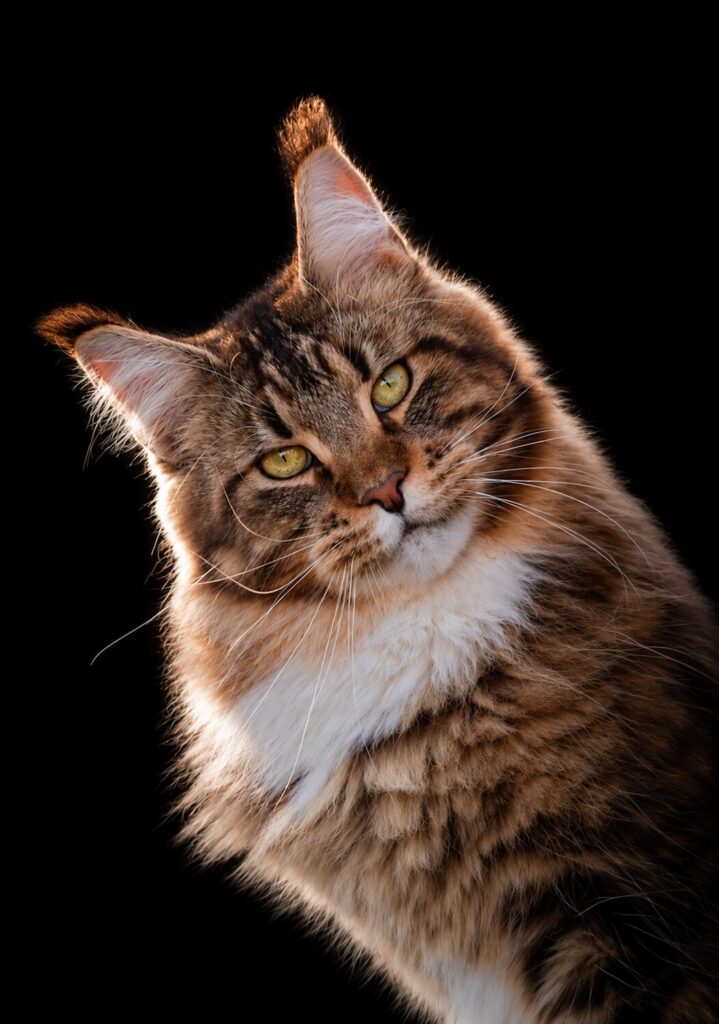
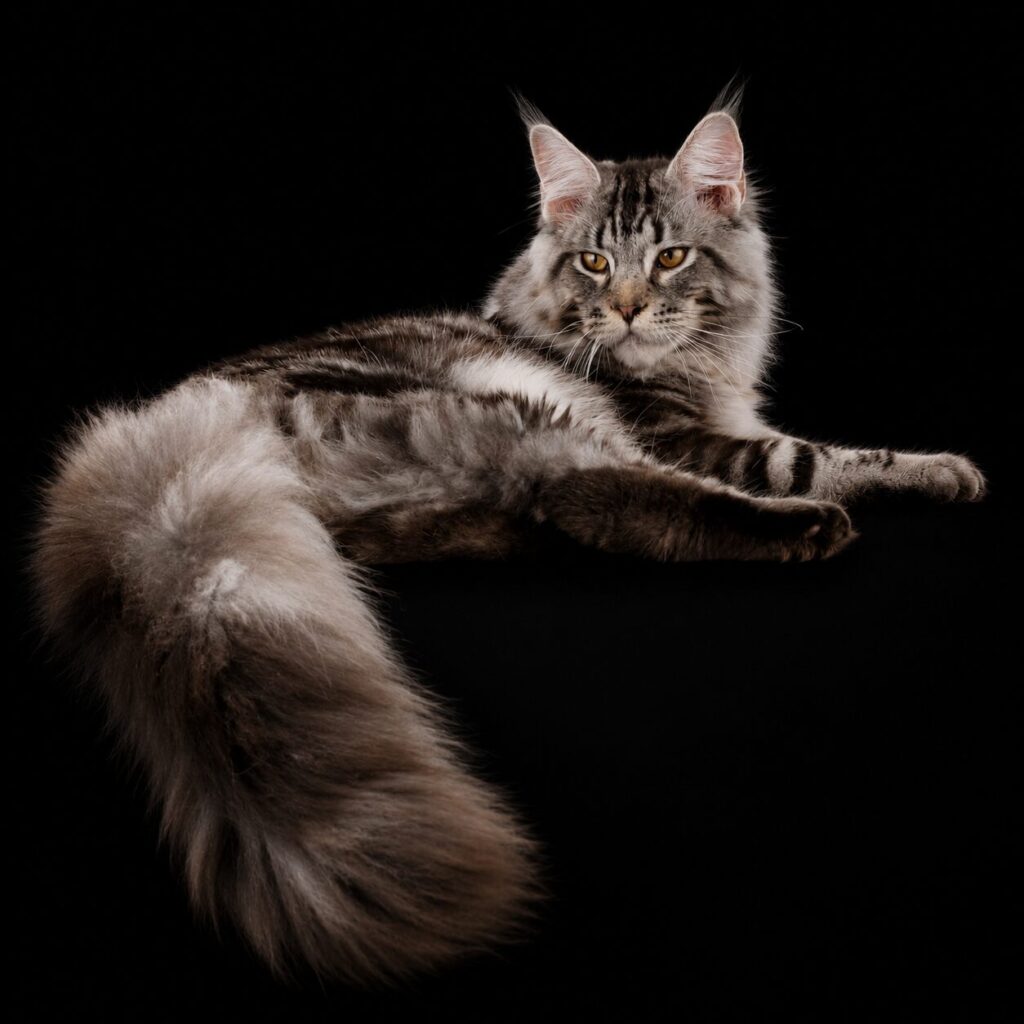
Long-haired cats — whether a pedigree breed or a long-haired moggy — have unique coats, behaviour, and handling needs that differ significantly from other companion animals. Grooming long-haired cats, including breeds such as Maine Coons, Norwegian Forest Cats, Siberians, Ragdolls, British Longhairs, and Birmans, requires specialist knowledge of coat texture, seasonal moulting, breed presentation, and feline behaviour.
At The Velvet Feline, every appointment focuses exclusively on your cat. Years of championship grooming experience have shaped the techniques, products, and handling methods used throughout every treatment, allowing each appointment to be adapted to your cat’s coat condition, temperament, and individual needs — whatever their breed or background.
What makes The Velvet Feline different from other cat grooming salons?
Every cat deserves exceptional care — that’s the simple philosophy behind everything we do at The Velvet Feline. Whether your cat is a cherished family companion, a much-loved moggy, an elderly rescue, a breeding queen, or an international show champion, every groom is approached with the same patience, respect, and meticulous attention to detail.
That standard comes from decades of experience exhibiting and grooming cats at national and international level, where presentation is judged to the finest detail and excellence is expected rather than admired. This background shapes every appointment we offer — not just for competition cats, but for every cat who visits us.
Appointments are arranged individually, allowing sufficient time for a thorough coat assessment, thoughtful cat grooming, and a calm experience from beginning to end.
Where is The Velvet Feline located?
The Velvet Feline is a specialist cat grooming salon in St Albans, Hertfordshire, welcoming clients from Greater London, the Home Counties, and throughout the United Kingdom. Owners travel from Buckinghamshire, Bedfordshire, Berkshire, Cambridgeshire, Essex, Kent, Oxfordshire, Surrey, Sussex, Hampshire, and even the Midlands and beyond, because experienced specialist cat groomers remain comparatively rare.
Whether you live twenty minutes away or several hours from St Albans, every appointment is designed to justify the journey. Owners choose The Velvet Feline because they value genuine feline expertise, patient one-to-one handling, and grooming tailored entirely to the individual cat — rather than a standardised service.
Which breeds and coat types do you groom?
The Velvet Feline welcomes cats of every breed, age, and coat type — including much-loved moggies and mixed-breed cats.
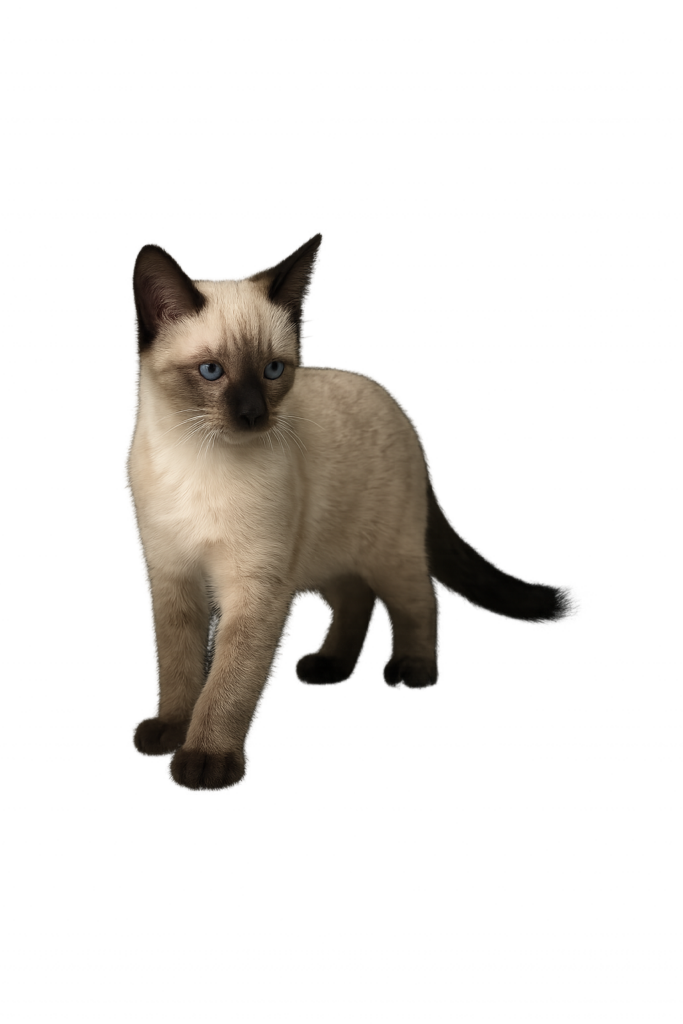
We regularly groom Maine Coons, Norwegian Forest Cats, Siberians, Persians, Ragdolls, British Longhairs, Birmans, Turkish Angoras, Turkish Vans, Ragamuffins, Exotic Longhairs, Himalayans, and Domestic Longhairs, together with short-haired breeds including British Shorthairs, Bengals, Burmese, Russian Blues, Abyssinians, Oriental Shorthairs, Devon Rex, and Cornish Rex, as well as hairless breeds including the Sphynx.
Every breed and coat type presents different grooming requirements. Dense double coats, silky flowing coats, wool-rich undercoats, and hairless skin each require different techniques, products, and handling. Rather than following a fixed routine, every treatment is tailored to your cat’s breed, coat condition, lifestyle, and temperament.
Do you only groom pedigree cats?
Not at all.
Some of our most rewarding appointments involve much-loved domestic cats — moggies — whose coats simply need specialist attention. Long-haired moggies are every bit as deserving of professional cat grooming as pedigree cats, and often face many of the same coat care challenges, including matting, excessive shedding, and seasonal moulting.
Whether your cat came from an internationally recognised breeder or wandered into your life unexpectedly, they’ll receive exactly the same thoughtful care and attention.
Is professional cat grooming really necessary?
Although cats are excellent self-groomers, they cannot always maintain every part of their coat effectively — whether pedigree, moggy, or mixed-breed.
Long-haired cats naturally develop dense undercoats that can trap loose hair, leading to knots and matting if not professionally maintained — this includes long-haired moggies just as much as breeds such as Maine Coons, Norwegian Forest Cats, Siberians, Ragdolls, British Longhairs, and Birmans. Elderly cats, overweight cats, and those with reduced mobility may also struggle to groom themselves as thoroughly as they once did.
Professional cat grooming helps remove loose undercoat, reduce excessive shedding, maintain healthy skin and coat condition, and keep your cat comfortable throughout the year. It also allows experienced hands to notice changes in the coat or skin that owners may wish to discuss with their veterinary surgeon.
Is professional cat grooming worth travelling for?
Our clients believe it is.
Owners regularly travel from London, the Home Counties, and further afield because they want more than a routine grooming appointment. They’re looking for experience, reassurance, and a calm environment where their cat is treated with patience and genuine understanding.
Professional feline grooming is a highly specialised discipline. Experience handling hundreds of cats across many breeds cannot be learned overnight, and many owners choose The Velvet Feline because they appreciate the difference that specialist cat grooming expertise can make to both their cat’s comfort and the finished result.
What happens during my cat’s first appointment?
Every new client begins with a complimentary coat assessment.
Before any grooming takes place, we examine your cat’s coat condition, discuss their grooming history, and take time to understand their temperament, lifestyle, and any concerns you may have. This assessment allows us to recommend the most appropriate treatment, while explaining exactly what can realistically be achieved during the appointment.
If additional work such as knot removal, clipping, or remedial coat care would benefit your cat, this will always be discussed beforehand. Our recommendations are guided by your cat’s comfort, welfare, and long-term coat health — rather than cosmetic appearance alone.
How often should my cat be professionally groomed?
There is no universal grooming schedule because every cat’s coat is different.
The ideal frequency depends on your cat’s breed, coat type, age, lifestyle, home grooming routine, health, and how quickly their coat develops knots, excess undercoat, or grease.
Following your first appointment, we can recommend a maintenance grooming programme tailored specifically to your cat. Regular professional grooming often helps prevent coat problems developing in the first place, making each subsequent appointment more comfortable for both you and your cat.
Do you groom nervous, anxious or elderly cats?
Yes.
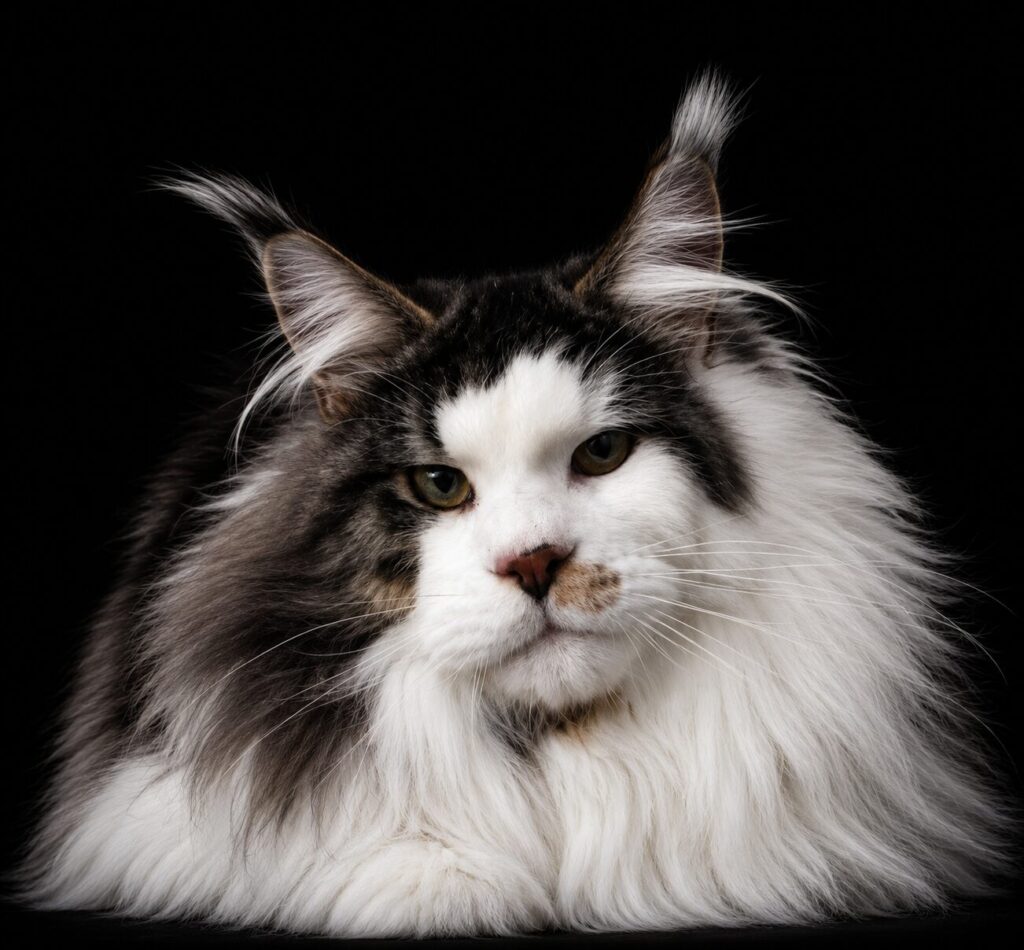
Many of the cats we see are naturally cautious, elderly, recently adopted, or have never experienced professional cat grooming before. Years of specialist feline handling have taught us that every cat responds differently, and no two appointments are ever identical.
Every grooming session is arranged on a private, one-to-one basis, allowing us to work patiently at your cat’s pace while adapting our approach to suit their confidence, age, and individual temperament. For senior cats, we also consider comfort, mobility, and the need for regular breaks throughout the appointment.
Can you groom cats with knots or matted fur?
Here’s this one revised — leading with the general point (any cat, not just pedigrees) before the breed list, plus SEO polish:
Can you groom cats with knots or matted fur?
Yes. Caring for cats with knots or matted fur is one of the most common reasons owners seek professional cat grooming — and it can affect any cat, regardless of breed. Long-haired cats are particularly prone to matting, including breeds such as Maine Coons, Persians, Norwegian Forest Cats, Siberians, Ragdolls, British Longhairs, and Birmans, though any cat, pedigree or moggy, can develop knots if loose coat isn’t removed regularly.
Every appointment begins with a thorough coat assessment to determine the safest and kindest approach. Small, loose knots can often be carefully removed, while more extensive matting may require clipping where brushing would cause unnecessary discomfort. Our priority is always your cat’s welfare, and we’ll explain our recommendations before any additional work is carried out.
Why does my cat’s coat become matted?
Here’s this one revised, with a mention of outdoor/weather-related causes worked in, plus SEO polish:
Why does my cat’s coat become matted?
Matting occurs when loose hairs become trapped within the coat and gradually tangle together, forming dense knots that tighten over time. This is especially common in long-haired and double-coated cats, during seasonal moulting, or when cats struggle to groom themselves because of age, arthritis, illness, or reduced mobility. Outdoor cats can also be more prone to matting, as rain, damp weather, mud, and debris such as twigs or burrs can work their way into the coat and encourage tangling.
Areas such as the armpits, chest, tummy, behind the ears, around the tail, and between the back legs are particularly susceptible. Once mats begin to form, they rarely resolve without intervention and generally become tighter over time.
Regular professional grooming, combined with an appropriate home care routine, helps prevent matting before it becomes uncomfortable for your cat.
Is matted fur painful for cats?
Unfortunately, it can be.
Tight mats pull continuously on the skin, restricting natural movement and causing discomfort whenever your cat stretches, jumps, or lies down. Severe matting may also trap dirt, moisture, and loose hair close to the skin, increasing the risk of skin irritation.
Many cats become remarkably more comfortable once heavy matting has been removed. For this reason, we always recommend addressing matted fur promptly rather than waiting for it to worsen.
Can mats be brushed out?
Not always.
While small, surface knots may sometimes be removed using specialist grooming techniques, tight mats that sit close to the skin are often impossible to brush out comfortably. Attempting to force these mats apart can cause unnecessary pain and may even damage delicate skin.
Where clipping is the safest and kindest option, we’ll always explain why before beginning treatment. Our aim is never simply to preserve coat length — it is to protect your cat’s comfort and wellbeing.
Will my cat need to be shaved?
Not necessarily.
Whenever it’s safe and comfortable to do so, we’ll preserve as much of your cat’s coat as possible. However, when matting is severe, clipping may be the most humane solution.
Many owners understandably feel disappointed when clipping becomes necessary, but healthy coat regrowth almost always begins immediately. In most cases, removing painful matting allows the skin and coat to recover properly, while giving owners the opportunity to establish a regular grooming routine that helps prevent future problems.
Please don’t feel embarrassed if your cat is matted
Matting is one of the most common coat problems we see, and it affects cats for many different reasons. Age, illness, seasonal moulting, changes in mobility, coat type, and even a particularly busy family life can all contribute.
Our role is never to judge. It’s simply to assess your cat’s coat, recommend the safest approach, and help restore their comfort. Every cat’s grooming journey starts somewhere, and seeking professional cat grooming help is always a positive first step.
What is a Lion Cut?
A Lion Cut is one of the most recognisable feline styling clips, where the body coat is clipped short while fur is retained around the head, lower legs, and tail. Depending on your preference, the tail may remain fully coated or be finished with a traditional pom-pom.
Lion Cuts are commonly chosen for cats with extensive matting, exceptionally dense coats, older cats who struggle to groom themselves, or owners who prefer a lower-maintenance style. Every Lion Cut is tailored to the individual cat and is always followed by a professional bath and hand blow-dry to remove loose coat, cleanse the skin, and leave the coat looking its very best.
What is a Teddy Cut or Comb Cut?
A Teddy Cut, often known as a Comb Cut, leaves an even layer of coat over the body, creating a beautifully soft, plush appearance while making the coat considerably easier to maintain.
Unlike a Lion Cut, much of the coat remains, preserving a more natural look. It’s a popular choice for any long-haired cat whose owner would like a shorter, more manageable coat without removing it completely — including breeds such as Maine Coons, Persians, Ragdolls, and other long-haired cats, as well as long-haired moggies.
To achieve an even finish, the coat must be free from significant matting before clipping begins.
Which styling cut is right for my cat?
The most suitable styling option depends entirely on your cat’s coat condition, lifestyle, and your long-term grooming goals.
Some owners prefer to maintain a full, natural coat through regular grooming appointments, while others choose a Comb Cut for easier maintenance, or a Lion Cut where heavy matting or practical considerations make this the most appropriate option.
We’ll always discuss your cat’s coat with you before recommending any styling treatment, ensuring the chosen approach is both practical and in your cat’s best interests.
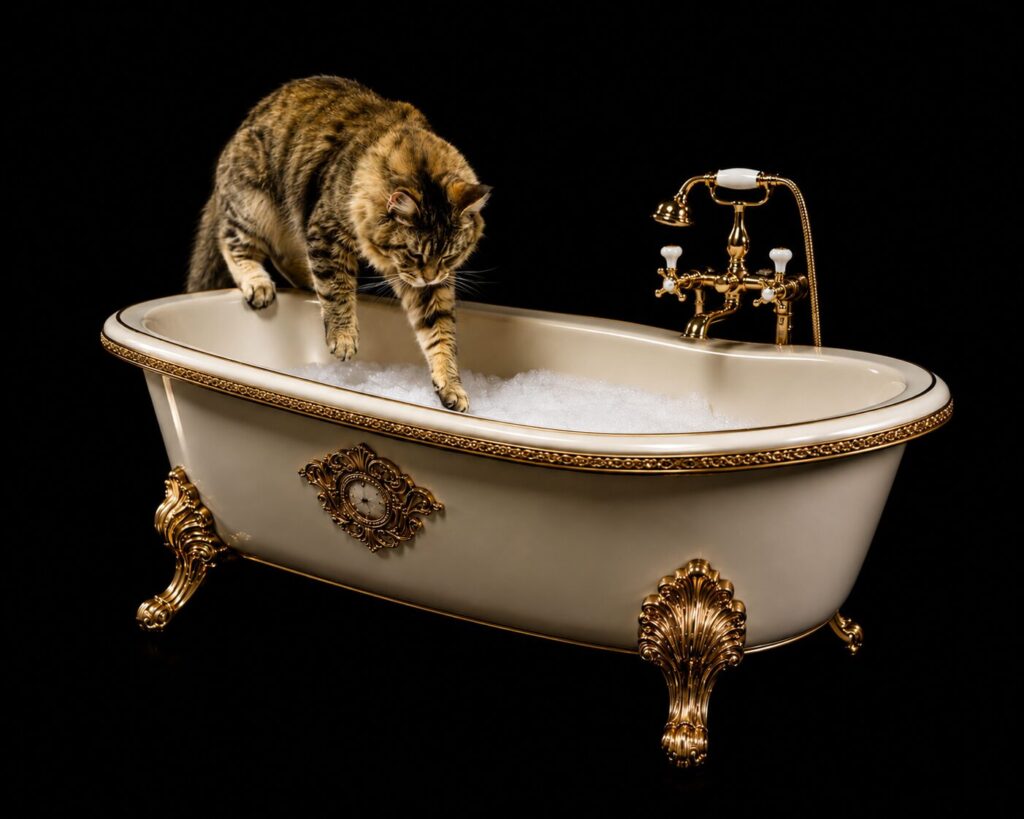
Why does every styling treatment include a professional bath?
Styling is only part of the grooming process.
Following clipping or trimming, professional bathing removes loose hair, natural oils, and clipper residue from the coat while thoroughly cleansing the skin. The coat is then carefully hand dried to separate individual hairs, remove remaining loose undercoat, and produce the smooth, even finish expected from professional feline grooming.
Bathing also allows specialist grooming products to nourish the coat, leaving it cleaner, lighter, and easier to maintain between appointments.
Do cats really need bathing?
Many owners are surprised to discover that professional bathing can significantly improve both coat condition and comfort, particularly for long-haired cats.
A properly performed feline bath removes excess oils, loose undercoat, environmental dirt, and product build-up that brushing alone cannot eliminate. For any cat with a dense coat — including breeds such as Maine Coons, Norwegian Forest Cats, Persians, Siberians, and Ragdolls, as well as long-haired moggies — regular professional bathing often leaves the coat lighter, cleaner, and much easier to manage.
Every bath is tailored to your cat’s individual coat and skin, using carefully selected professional products designed specifically for feline grooming.
What is a de-shedding treatment?
A professional de-shedding treatment is designed to remove loose undercoat before it has the opportunity to become tangled within the coat or shed throughout the home.
Using specialist grooming techniques, professional bathing, and careful hand drying, excess undercoat is safely removed while preserving the healthy outer coat. This treatment is particularly beneficial during seasonal moulting and is highly recommended for any cat with a thick double coat — including breeds such as Maine Coons, Norwegian Forest Cats, Siberians, and British Longhairs, as well as double-coated moggies.
Many owners notice significantly less hair around the home following a de-shedding treatment, while their cats often appear more comfortable and better ventilated during warmer months.
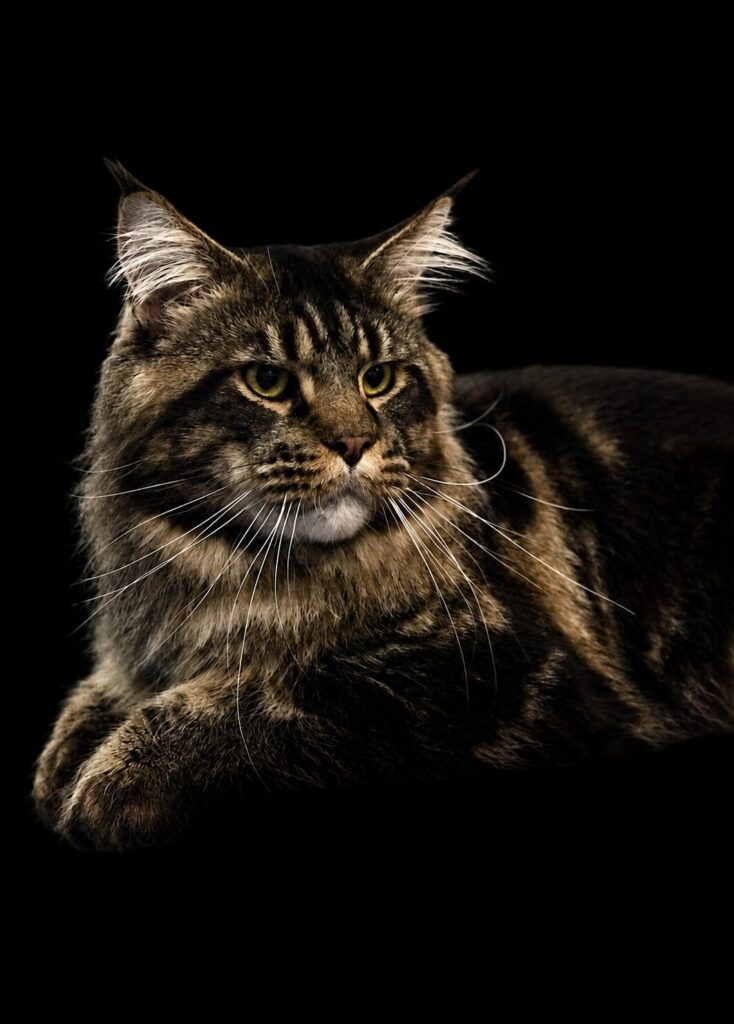
Why is professional hand drying so important?
Professional hand drying is one of the most important — and most overlooked — stages of feline grooming.
Simply allowing the coat to dry naturally can leave loose undercoat trapped against the skin, increasing the likelihood of future knots and matting. Careful hand drying helps separate the coat, remove remaining loose hair, enhance volume where appropriate, and reveal the true condition of the coat before final finishing.
For long-haired cats in particular, this stage plays a significant role in achieving a healthy, beautifully presented coat.
Can you groom elderly cats?
Absolutely. As cats grow older, changes such as arthritis, reduced flexibility, or general stiffness can make it difficult for them to groom themselves thoroughly. Areas that were once easy to reach may gradually become neglected, allowing loose undercoat, knots, and matting to develop.
Professional grooming for senior cats helps keep them comfortable by maintaining the coat, removing excess undercoat, and preventing small knots from becoming painful mats. Every appointment is adapted to your cat’s age, mobility, and individual comfort, allowing plenty of time for a gentle, considered groom that supports their wellbeing
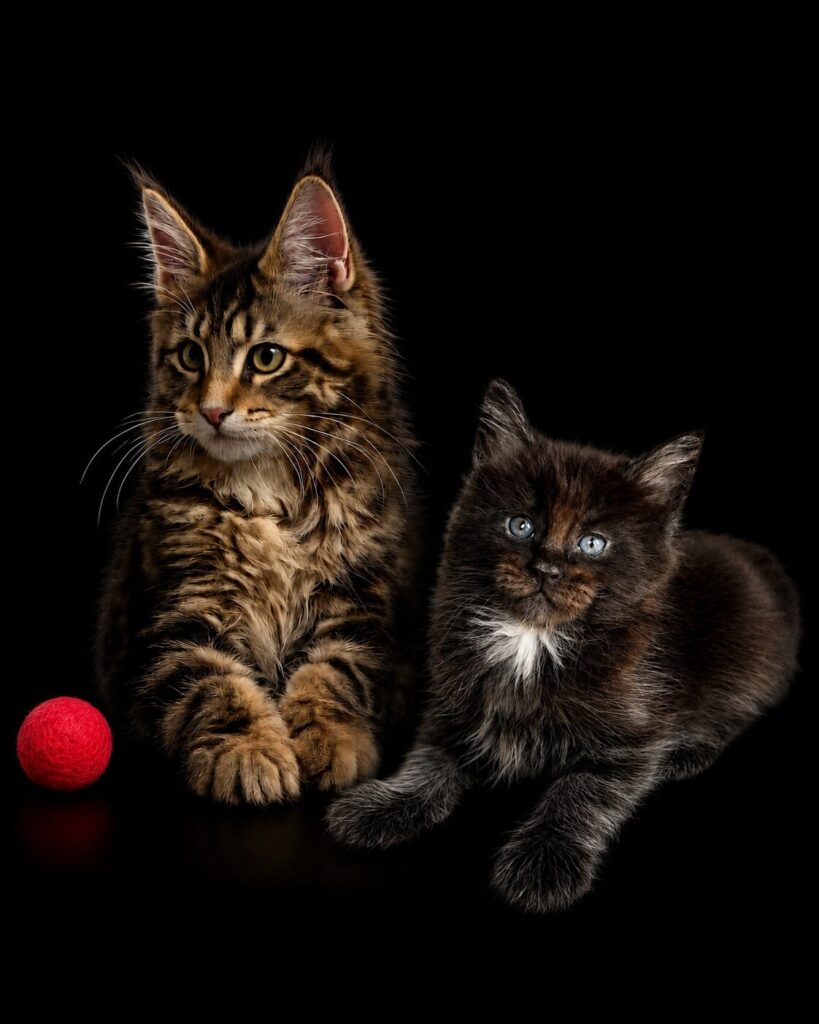
Should kittens be professionally groomed?
Yes. Introducing kittens to professional grooming from an early age helps them become familiar with being gently handled, brushed, bathed, and dried in a calm environment.
Early positive experiences often make future grooming, routine care, and veterinary examinations significantly less stressful. Even if your kitten’s coat is currently easy to manage, introducing kitten grooming while they’re young can establish excellent lifelong habits.
Every kitten is treated with patience, allowing them to build confidence at their own pace.
Can you groom nervous, timid or rescue cats?
Yes. Many cats are naturally cautious, while others may have had little previous handling or difficult experiences in the past. Rescue cats, in particular, sometimes need additional patience while they learn that grooming can be a calm and positive experience.
Every appointment is arranged on a private, one-to-one basis, allowing us to work at your cat’s pace rather than to a strict timetable. Gentle handling, careful observation, and an understanding of feline behaviour help us adapt each groom to the individual cat, rather than expecting every cat to respond in the same way
Do you sedate cats for grooming?
No.
The Velvet Feline does not sedate cats for routine grooming appointments.
Instead, we rely on calm handling, experience, and allowing sufficient time for each cat to feel comfortable throughout the grooming process. If, during an appointment, we feel that continuing would compromise your cat’s welfare or cause unnecessary stress, we’ll always discuss the situation with you rather than forcing the groom to continue.
Your cat’s wellbeing will always take precedence over completing a treatment.
In cases where your cat does need sedating, we’re happy to work with your vet to ensure ideal timing and welfare for your cat during the grooming session.
Can you groom cats that have never been professionally groomed before?
Yes, and many of our clients are visiting a professional groomer for the very first time.
Every cat begins with a thorough coat assessment, allowing us to understand their coat condition, temperament, and previous grooming experience before recommending the most appropriate treatment. First appointments are approached with patience, giving your cat time to become familiar with the environment and allowing us to build trust from the very beginning.
Everyone starts somewhere, and we’re delighted to welcome first-time feline clients.
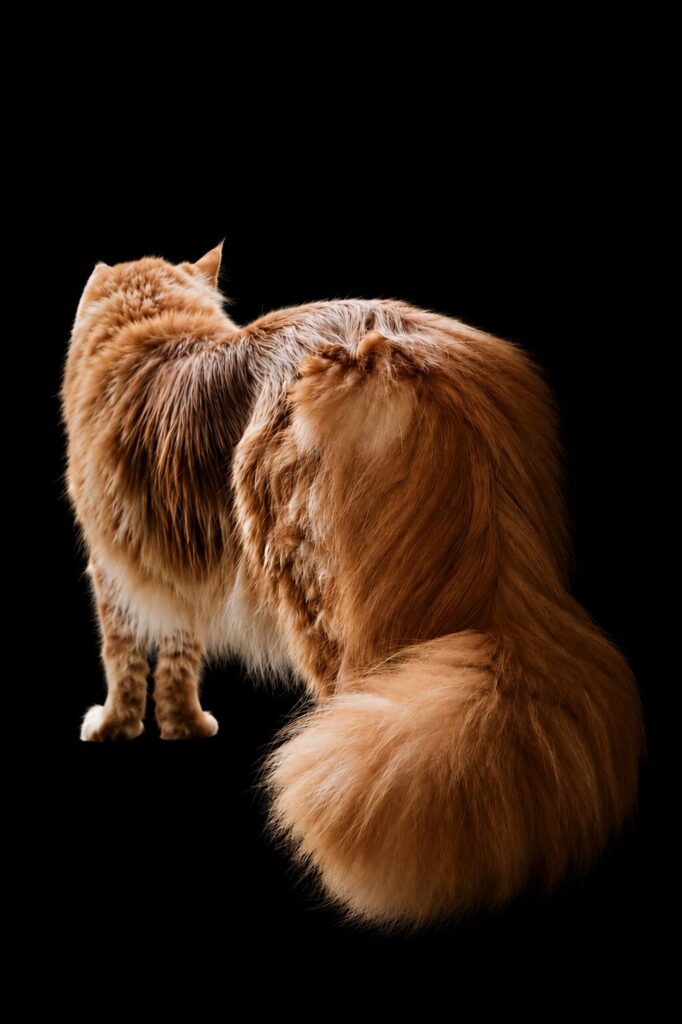
My cat hates being brushed at home. Can you still help?
In most cases, yes.
Cats often dislike brushing because it has become associated with discomfort caused by knots, pulling, or inappropriate grooming tools. By using professional techniques, suitable equipment, and a patient approach, we aim to make grooming as comfortable as possible while improving the condition of the coat over time.
Regular professional maintenance also reduces the amount of brushing required at home, helping to make day-to-day coat care easier for both you and your cat.
Can you groom cats with fleas?
Yes, but please let us know before your appointment if fleas are present or suspected.
Advance notice allows us to prepare appropriately and helps protect other feline clients visiting the salon. Where suitable, a professional flea shampoo treatment can be incorporated into your chosen grooming appointment. Following treatment, we also recommend discussing ongoing flea prevention with your veterinary practice to help prevent re-infestation.
Can you remove ticks?
Yes.
Ticks can usually be removed safely during your grooming appointment using appropriate techniques designed to minimise discomfort. If you discover a tick before your visit, please let us know when booking so we can allow sufficient time and prepare accordingly.
If your cat has multiple ticks or appears unwell, we recommend seeking advice from your veterinary surgeon.
Why can’t cats with ringworm or active fungal infections be groomed?
Ringworm is not caused by a worm, but by a highly contagious fungal infection that affects the skin, hair, and claws. It spreads easily between cats and can also be transmitted to people. We check all cats with an appropriate, completely non-invasive tool for signs of ringworm prior to grooming.
To protect the health and wellbeing of all our feline clients, we’re unable to accept cats with ringworm or any other active fungal skin condition. Once your veterinary surgeon has confirmed that treatment is complete and your cat has fully recovered, we’ll be delighted to welcome them for grooming.
Can professional grooming improve my cat’s coat condition?
Professional grooming plays an important role in maintaining a healthy, well-managed coat by removing loose undercoat, reducing excess oils, preventing matting, and keeping the coat clean and comfortable.
Every cat is different, and grooming is not a substitute for veterinary care where medical concerns exist. However, regular professional grooming can make coat maintenance significantly easier and contributes to your cat’s overall comfort and wellbeing.
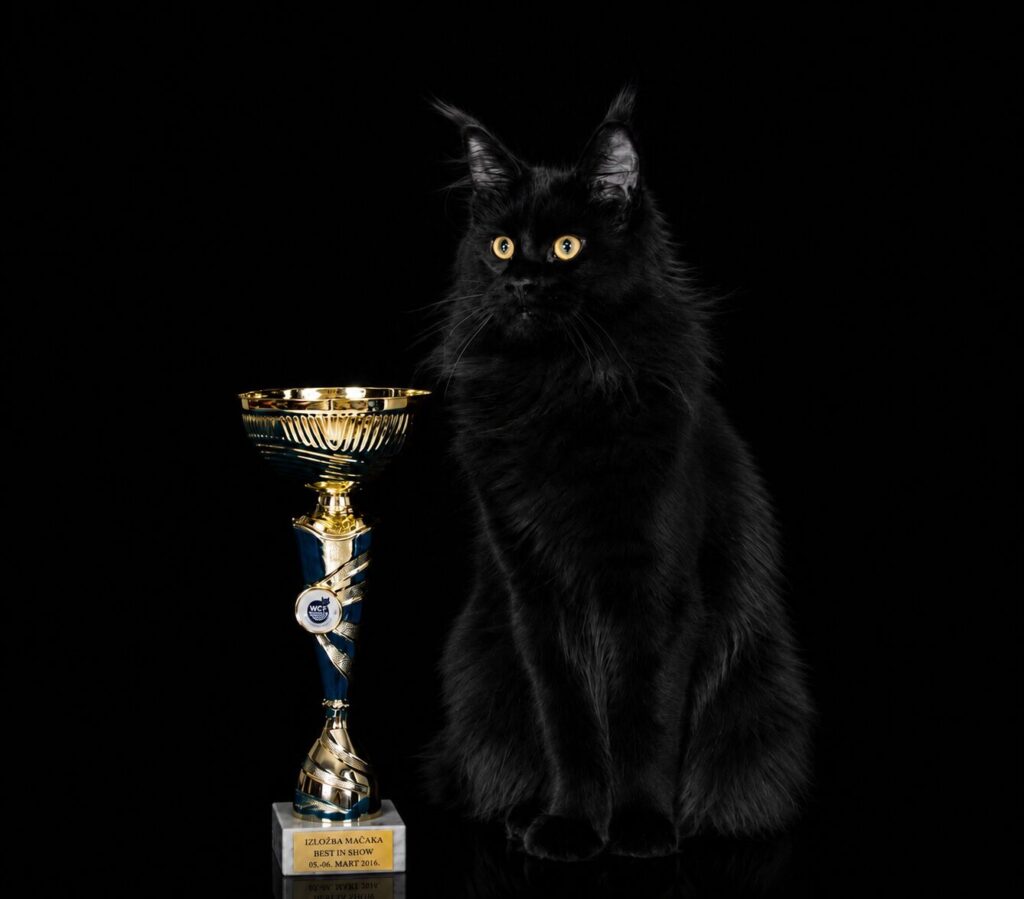
Do you groom championship show cats?
Yes.
The Velvet Feline was built upon decades of experience exhibiting and preparing cats for competition at national and international level, where presentation is judged to an exceptionally high standard.
Show grooming involves far more than bathing alone. Breed-specific coat preparation, timing, product selection, and meticulous finishing all contribute to presenting a cat at its very best. That same attention to detail influences every appointment at The Velvet Feline, meaning companion cats benefit from the very same thoughtful approach as championship exhibitors.
If you’ve ever wondered whether showing your cat might be for you, we’re always happy to help you take that first step and put you in touch with an experienced buddy to guide you through your first show. You don’t need a pedigree cat to show — many show categories welcome household pets and moggies, too, and we’d love to help you get started.
My cat isn’t a show cat. Will they receive the same standard of grooming?
Without question.
Our experience includes preparing championship-winning cats for the show bench — but our philosophy has never wavered: every cat deserves exceptional care, full stop.
Whether your cat spends weekends in the show hall or every afternoon asleep on the sofa, they receive exactly the same patience, expertise, and meticulous attention to detail. There is no lesser standard for a beloved family companion, and no higher standard reserved for a titled show champion. Every cat that comes through our door is treated as though they’re the only one that matters — because for the hour they’re with us, they are.
Can you help me choose the right grooming treatment?
Of course.
Every cat’s coat is different, and many owners are unsure which treatment is most appropriate. That’s precisely why every appointment begins with a professional coat assessment.
We’ll discuss your cat’s breed, coat condition, grooming history, and what you’d like to achieve before recommending the most suitable grooming treatment. If additional coat work is required, we’ll explain your options clearly and always obtain your agreement before carrying out any extra services.
How much does professional cat grooming cost?
Professional cat grooming is an investment in your cat’s comfort, coat health, and long-term wellbeing.
Treatments at The Velvet Feline begin from £60 for The House Ritual, with more comprehensive bathing, styling, and specialist coat treatments available according to your cat’s individual needs.
Because no two cats are alike, every appointment begins with a coat assessment to ensure you receive the most appropriate treatment, rather than paying for services your cat may not require. Any additional work, such as knot removal or styling, is always discussed with you before treatment begins.
How do I book an appointment?
Appointments are arranged personally by telephone or email rather than through an online booking system.
This allows us to learn more about your cat before your visit, understand their coat condition and temperament, and recommend the most appropriate treatment while allowing sufficient time for their appointment.
If you’re unsure where to begin, simply get in touch. We’ll be delighted to guide you through the options and answer any questions you may have before booking your appointment.
And last but not least
Whether your cat is a playful kitten, a distinguished senior, a magnificent pedigree, a much-loved long-haired moggy, a rescue, or an accomplished show champion, they will always be welcomed with patience, kindness, and genuine respect.
At The Velvet Feline, grooming is never simply about appearance. It’s about comfort, trust, wellbeing, and helping every cat look and feel their very best.